10 Engagement Ring Rules & Etiquette Myths You Should Know
When it comes to engagement ring etiquette and engagement ring rules, there’s a lot of outdated advice doing the rounds. From age-old traditions to modern misconceptions, it can be tricky to separate fact from fiction. So, whether you're shopping for the ring or anticipating a proposal, we’re here to clear things up.
From the idea that an engagement ring must cost three months' salary to the belief that only women should wear them, there are countless traditions that modern couples are beginning to question. We’re setting the record straight on some of the most common etiquette myths surrounding engagement rings, helping you feel informed and confident about your next steps. Think of this as your go-to guide, packed with expert insight and helpful truths.
Explore our in-depth Engagement Ring Buying Guide for expert advice and further information on helping you find the one.
Myth #5: Engagement rings should have a diamond centre stone
Myth #6: You must buy the engagement ring before the wedding ring
Myth #8: Engagement rings should be worn on the left hand ring finger
Myth #9: Wedding rings should be worn on the left hand ring finger
Myth #10: You need both an engagement ring and a wedding ring
Myth #1: Engagement rings should be a secret
The element of surprise has been romanticised for decades. From dramatic down-on-one-knee moments to hidden-ring-box proposals, the idea that the proposer must choose the perfect ring in secret has long been seen as the ultimate romantic gesture. Tradition says it’s their job to get it right – without any help or hints. But while the surprise proposal still holds a special place for many, the notion that everything must be kept under wraps is becoming increasingly outdated.
Can couples shop for engagement rings together? Absolutely. In fact, involving both partners in the process often results in a ring that’s better suited to their style, values and budget. Whether it’s a chance to learn more about diamond quality, explore more sustainable options like lab grown diamonds or simply find a design that feels just right, ring shopping together can be a meaningful and memorable part of the journey.
That’s not to say the element of surprise is off the table entirely. Some still prefer to keep the final choice, or the timing of the proposal, a secret. If your partner loves surprises and you feel confident about their taste, a solo mission might still be on the cards. But if your partner is particular about their style, or if you’ve both been openly discussing your future, it’s worth having that conversation. Collaboration doesn't make the moment any less special, it just ensures the ring is as perfect as the proposal.

Myth #2: Men should be the ones to purchase the engagement ring and propose
This myth is rooted in traditional gender roles, where men were expected to take the lead in romantic milestones, from asking the father’s permission to choosing and purchasing the engagement ring, and of course, getting down on one knee. For generations, the act of proposing was considered a man’s role, with little thought given to reversing or sharing the responsibility.
Today, proposals are far more diverse and personal. Many women are choosing to propose to their partners, and plenty of couples decide to split the cost of the engagement ring, especially if they’ve chosen it together. Love doesn’t follow a script, and the decision to get engaged can be just as special when it’s mutual, shared and collaborative.
Thinking about proposing to your partner? We’ve got advice and inspiration to help you feel confident about flipping the script. Read our article Leap Year Proposal: How To Propose To A Man for helpful tips and thoughtful ideas.

Myth #3: Only women wear engagement rings
Traditionally, engagement rings were seen as a symbol of a woman’s commitment and, in many historical contexts, ownership. The ring signified that she was “spoken for”, while her partner remained ring-free until the wedding. It’s a view rooted in old-fashioned gender roles, where proposals were one-sided and largely male-led.
Today, with growing emphasis on equality and shared commitment, the idea that only women should wear engagement rings is quickly fading. Many modern couples, inspired by both personal values and celebrity engagement ring examples, now choose for both partners to wear rings as a visible sign of their love and engagement. In fact, male engagement rings are becoming more popular than ever, with a variety of designs now available to suit all styles and preferences.
This evolution is particularly meaningful for LGBTQIA+ couples and non-binary people, who often look beyond traditional labels to find pieces that reflect their true selves. Many find that the silhouettes traditionally categorised as women's engagement rings can be adapted or paired with more architectural bands to create a unique, gender-affirming look. Ultimately, the choice of ring is an expression of identity, not a fulfilment of a gendered expectation.
And it’s not just a modern Western movement. In countries like Chile, Sweden and Brazil, it’s long been customary for both partners to wear engagement rings, often switching them from right to left hand once married. Whether it’s a plain band, a diamond set design or something entirely bespoke, there are no rules when it comes to who can wear an engagement ring – only what feels meaningful to you as a couple.

Myth #4: Engagement rings should cost 3 months’ salary
Does a man need to spend 3 months' salary on a ring? It’s a question that’s often asked, and it all comes down to a clever marketing campaign from the mid-20th century. The “three months’ salary rule” didn’t start as tradition; it started with a slogan. In the 1930s, diamond giant De Beers launched a campaign suggesting a man should spend one month’s salary on an engagement ring. By the 1980s, this had crept up to three months, with ads positioning the ring’s price as a measure of love and commitment – a notion that has lingered ever since.
But in today’s world, this idea simply doesn’t hold up. Financial pressures, rising living costs and evolving relationship dynamics mean the “3-month rule” isn’t realistic – or necessary – for most couples. The cost of an engagement ring should reflect your personal budget, values and priorities, not an outdated marketing message. In fact, smart spending often leads to a more meaningful purchase. Opting for a lab grown diamond, choosing a modest carat size or designing a bespoke engagement ring with your jeweller can help you create something special without overspending.
Curious what a healthy budget looks like for you? Our guide on How Much Should You Spend On An Engagement Ring breaks it down with expert advice to help you make a confident and informed decision.

Myth #5: Engagement rings should have a diamond centre stone
Diamonds might be the most popular choice for engagement rings today, but that hasn’t always been the case. It wasn’t until the 20th century, when diamond marketing took off (largely thanks to De Beers’ now-famous campaigns), that diamonds became the go-to for proposals. The phrase “a diamond is forever” helped cement the stone’s association with eternal love, and from there, diamond engagement rings dominated the market.
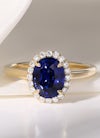
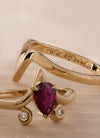
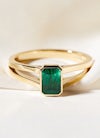
But while diamonds remain a timeless and versatile option, they’re far from your only choice. More couples are exploring unique and alternative engagement ring styles that reflect their individual style, and that often means considering alternative centre stones like sapphires, emeralds or even salt and pepper diamonds. These stones offer a rich palette of colour, personality and meaning, and can often offer greater size-for-price value compared to traditional white diamonds. Explore our Gemstones Guide to learn more about each stone’s characteristics.
Myth #6: You must buy the engagement ring before the wedding ring
Traditionally, the engagement ring comes first, with the wedding bands purchased closer to the big day. But modern preferences are far more flexible. Some couples choose their wedding bands first, others buy both rings together, and many mix-and-match purchase times depending on budget and priorities.
When deciding the order, consider a few practical factors:
- Style coordination – do you want your rings to match perfectly or contrast?
- Budget – splitting purchases across time can help manage costs.
- Long-term wearability – think about comfort, stacking options and how the two rings will sit together. Customisation trends like matching sets and stackable ring styles mean you can design a cohesive look that evolves with you over time.
For a ring that’s truly yours, design a bespoke engagement ring with us – perfect for creating an engagement ring and wedding band that are beautifully in sync. For more on the differences between the two, read our guide: Engagement Ring vs Wedding Ring: What's the Difference?

Myth #7: You must propose with an engagement ring
Proposing with an engagement ring is common, but it’s far from compulsory. The essence of a proposal is the commitment, not the jewellery. Some couples choose other tokens of love, such as a piece of jewellery that can be worn daily, an heirloom passed down through generations or even a symbolic object that reflects a shared passion or memory.
Others prefer to design or shop for the ring together after the proposal, ensuring the final choice suits the wearer perfectly. This approach can take pressure off the proposer, allow for joint budgeting and make the selection process a meaningful shared experience.
The truth is, there’s no single right way to propose. Whether you opt for a traditional diamond ring, a unique gemstone or no ring at all, it’s your relationship and your moment – make it yours.

Myth #8: Engagement rings should be worn on the left hand ring finger
This tradition stems from the ancient Roman belief in the vena amoris, or “vein of love”, which was thought to run directly from the left hand ring finger to the heart. While the science doesn’t back this up, the symbolism stuck, and in the UK (and much of the Western world) the left hand remains the most popular choice.
However, there’s no hard-and-fast rule. Many people choose the right hand for cultural, practical or personal reasons, from comfort while working to wanting a fresh take on tradition. Modern couples are making ring-wearing a matter of preference rather than convention.
For ideas on how to style your ring in a way that works for you, see our guide: How To Wear Your Engagement Ring: A Guide To Styling.
Our expert jewellery designer's thoughts on how to wear an engagement ring
‘We believe in the beauty of personal expression in jewellery. Everyone should feel empowered to wear their engagement rings in a way that truly reflects their personal style.’

Myth #9: Wedding rings should be worn on the left hand ring finger
The left hand tradition isn’t universal. In countries like Norway, Germany, Russia and Greece, wedding rings are worn on the right hand. In others, the side is chosen for practical reasons, for example, to avoid wear if you work with your hands. This list of countries shows just how varied traditions can be.
Some people also switch hands or positions entirely, stacking the wedding ring above the engagement ring or wearing it alone. Ultimately, comfort and lifestyle should guide your decision.
If you’re wondering how to style your rings for the big day, our guide Do You Wear Your Engagement Ring On Your Wedding Day? explores the most popular, and practical, options.

Myth #10: You need both an engagement ring and a wedding ring
It’s perfectly fine to have both, but it’s equally fine to have just one. Some couples opt for a single, meaningful ring to symbolise both their engagement and marriage, often for minimalist, financial or practical reasons.
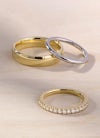
Others prefer to design one show-stopping piece that’s comfortable enough to wear every day, or to choose a wedding band that pairs seamlessly with the engagement ring but can also be worn alone. The key is personal preference over societal expectation – the best choice is the one that works for your lifestyle and reflects your love story.


Feeling inspired? Find the perfect engagement ring with Queensmith
Whether you’re breaking tradition, following it or creating your own, we’re here to help you craft a ring that’s the perfect fit for your relationship. From diamonds to gemstones, minimal bands to bespoke masterpieces, our Hatton Garden jewellers will work with you to bring your vision to life.

Become an expert
Read our rich and educational engagement ring guides and diamond advice on everything there is to know about rings and diamonds, to help you create the best engagement ring for you.


Ready to find the perfect engagement ring? Start your journey with Queensmith