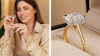
2016 vs 2026: How Weddings & Engagement Ring Trends Have Changed Over the Last Decade

Having steered the ship of Queensmith's creative content since 2017, India finds immense satisfaction in arming clients with the information they're seeking, identifying and analysing trends, and exploring buying habits.

From halo engagement rings to oval diamond rings, platinum to yellow gold, and the arrival of lab grown diamonds, the engagement ring landscape today looks very different to the one we knew when Queensmith first opened its doors.
As Queensmith celebrates its 10th birthday, we're looking back at the engagement ring and wedding trends that defined 2016 and comparing them to the styles shaping proposals in 2026.
A decade ago, weddings were embracing rustic romance, DIY details and Pinterest-inspired personal touches. Engagement rings reflected the same mindset, favouring sparkle, intricate designs and maximum impact.
Today, couples are still seeking individuality, but they're expressing it differently. Larger centre stones, minimalist settings and highly personalised designs have replaced many of the trends that once dominated wedding mood boards.
However, as with many trends, what goes around often comes around. One of the defining fashion movements of 2026 has been Gen Z's embrace of nostalgia, with everything from Y2K fashion to 2010s aesthetics enjoying a revival. It's a trend that's beginning to influence the world of weddings and engagement rings too, with several styles from 2016 re-emerging in fresh, modern forms.
How Did Pinterest Shape Wedding Trends in 2016?
To understand engagement ring trends in 2016, it's worth remembering what weddings looked like at the time.
This was the golden age of Pinterest planning. Flower crowns, blush pink bridesmaid dresses, naked cakes and handwritten chalkboard signs were everywhere. Couples embraced DIY styling and personalised details, turning weddings into carefully curated reflections of their personalities.

Natural materials featured heavily throughout wedding décor. Wood, exposed metals, concrete and industrial-inspired venues became increasingly popular, often softened with romantic colour palettes featuring dusty rose, deep purple, frosted grey and rich jewel tones such as teal, emerald and plum.

Personalisation emerged as one of the defining wedding trends of the year. Couples wanted custom touches everywhere, from bespoke stationery and favours to personalised vows and carefully selected colour schemes.

The engagement rings of the era followed a similar philosophy.
Why Were Halo Engagement Rings So Popular In The Mid-2010s?
In 2016, halo engagement rings were everywhere. Long before lab diamonds hit the mainstream, natural diamonds were the only option available to couples, so larger carat weights came with significantly higher price tags than they do today. The average carat weight was around 0.75ct, well under the 1-2ct benchmark today’s buyers aim for. Halo settings allowed couples to create a bigger visual impact by surrounding a centre diamond with smaller accent stones.
The result was a style that perfectly matched the wedding trends of the time: romantic, decorative and designed to maximise sparkle.
Just as weddings embraced layered details and elaborate styling, engagement rings often featured additional diamonds, intricate settings and ornate design elements.

Round Diamonds Were Most Popular In 2016
Round brilliant diamonds dominated the engagement ring market throughout 2016, accounting for around 9 in every 10 sales.
Their timeless appeal and unmatched sparkle made them the obvious choice for most couples, while oval diamonds remained a niche alternative. Back then, ring buyers were far more interested in the optimal sparkle a precision-cut round diamond engagement ring could offer than in finding the shape that best suited their style, or, like today’s buyers, in choosing shapes that appear larger for their carat weight, like ovals and pears.
Fast forward ten years and the landscape looks very different.
The changing popularity of diamond shapes is also reflected in online search behaviour. Google Trends shows that interest in round diamonds has remained relatively stable over the last decade, growing by just 41% since 2016. In contrast, searches for oval diamonds have surged by 235%, highlighting the dramatic rise of a shape that has become one of the defining engagement ring trends of 2026.
Today, oval diamonds account for 36% of Queensmith engagement rings, making them the most popular diamond shape. Round diamonds remain close behind at 33%, proving that some classics never


2016 Couples Were Obsessed With White Gold and Platinum Engagement Rings
The jewellery trends of 2016 mirrored broader fashion trends. White metals dominated engagement rings, with platinum leading the way thanks to its durability and naturally white appearance. White gold remained popular as a then lower-cost alternative, but now accounts for less than 1% of sales.
Meanwhile, rose gold was experiencing a major cultural moment in 2016. From wedding décor and bridesmaid accessories to table settings, stationery and jewellery, rose gold and copper accents appeared everywhere, and the metal became the go-to for those who wanted a slightly ‘different’ vibe for their engagement ring. In 2026, rose gold engagement rings accounted for less than 1% of Queensmith’s ring sales, while yellow gold rings dominated at 57%, followed by platinum at 42%.

In 2026, Couples Are Choosing Bigger Diamonds in Simpler Settings
If 2016 was about layering details, 2026 is about intentional simplicity.
Today's engagement rings are defined by larger centre stones, cleaner settings and a renewed focus on the diamond itself. While trends have shifted in many ways over the last decade, no change has been more significant than the arrival and widespread adoption of lab grown diamond engagement rings.
When Queensmith opened its doors in 2016, every diamond purchased for an engagement ring was natural. Couples looking for a larger centre stone often had to balance size against budget, leading many to choose designs such as halo engagement rings, which used smaller accent diamonds to create the illusion of a larger centre stone.

Ten years later, the landscape has been transformed.
In 2026, 79% of engagement rings created at Queensmith feature a lab grown diamond. More than any other trend, this has reshaped how couples approach engagement ring design. Lab grown diamonds have made larger, higher-quality diamonds accessible to a much wider audience, fundamentally changing what clients can get for their money.
As a result, the average centre stone purchased at Queensmith has grown to 1.76ct, while the average engagement ring value now sits at £5,750. The past 10 years haven’t seen a huge shift in average order values, but rather couples expecting and achieving more for their money thanks to the rise of lab diamonds.
The shift towards lab grown diamonds is clear not only in consumer purchasing habits but also in online search behaviour, with Google Trends data showing search interest has grown by 2,275% since 2016.
The impact extends far beyond carat weight. The rise of lab grown diamonds has changed the very aesthetic of engagement rings. Rather than relying on intricate settings, halos or multiple surrounding diamonds to create visual presence, many couples can now achieve that same impact through the centre stone alone.
This shift helps explain one of the defining engagement ring trends of 2026: the return of simplicity.
The solitaire has become the dominant engagement ring style, accounting for 51% of all engagement rings created at Queensmith. In contrast, halo engagement rings, once one of the most popular styles of 2016, now account for just 4% of designs.

Even among solitaire engagement rings, couples often favour subtle enhancements rather than statement embellishments. Around 27% of solitaire rings feature diamond-set shoulders, adding extra sparkle while ensuring the centre diamond remains the focal point.
The trend reflects a broader movement towards understated luxury. Modern couples are increasingly investing in fewer design elements, but larger and more impressive centre stones. The focus has shifted from creating the appearance of size to achieving genuine presence through the diamond itself.
Interestingly, while lab grown diamonds have become the dominant choice, natural diamonds continue to occupy an important place in the market. Today's natural diamond client is often highly intentional, seeking a significant and impressive natural stone rather than choosing natural by default.
Ultimately, the rise of lab grown diamonds has done more than introduce a new product category. It has fundamentally altered engagement ring design, influencing everything from diamond size and budget allocation to setting styles and consumer preferences. Looking back over the last ten years, no single trend has had a greater impact on the engagement ring industry.
2026 Couples Love Yellow Gold Engagement Rings More Than They Did In 2016
Another significant jewellery shift of the decade has been the return of yellow gold.
In 2016, white metals dominated the engagement ring market. Platinum was the most popular choice thanks to its durability and naturally white appearance, while white gold offered a lower-cost alternative for couples working within a tighter budget. Yellow gold was certainly present, but it was often considered a more traditional choice rather than a leading trend.
Today, 57% of Queensmith engagement rings are crafted in yellow gold, compared to 42% in platinum. The resurgence of yellow gold reflects wider fashion trends, with couples increasingly embracing warmer tones and old-money aesthetics.

At the same time, platinum has quietly strengthened its position within the market. While white gold was once frequently chosen as the more affordable white-metal option, rising gold prices have altered that equation. In 2016, gold averaged around £1,000 per ounce, whereas in 2026 it spent much of the year above £3,500 per ounce, highlighting just how dramatically the value of gold has increased over the last decade.
As a result, platinum has re-established itself as the default choice for couples seeking a white metal engagement ring. Clients continue to value its naturally white colour, durability and low-maintenance qualities, but today the pricing comparison is often more favourable than many people expect.
Couples Want Luxury Personalisation in 2026
Interestingly, while wedding aesthetics have changed dramatically since 2016, personalisation remains at the heart of modern celebrations. The difference is that today's weddings tend to feel more curated than crafted.
Instead of DIY details, couples are investing in bespoke experiences. Custom cocktails, personalised wedding logos and stationery, private content creators, outfit changes and carefully considered guest experiences have become increasingly common. Weddings are no longer just about following a trend; they're about creating an event that feels uniquely personal to the couple.
Social media continues to influence wedding planning, but inspiration now comes just as readily from celebrity weddings and TikTok trends as it once did from Pinterest boards. In many ways, modern couples have access to more inspiration than ever before, allowing them to mix influences from different eras and aesthetics.
Interestingly, we're also seeing elements of early 2010s and 2016-era weddings make a return. After years of minimalist styling, neutral colour palettes and understated celebrations, many couples are embracing a more playful, expressive approach to wedding planning. Nostalgia has become a major influence, with film photography, photo booths, disposable cameras and camcorder-style wedding footage all enjoying a resurgence as couples seek a more authentic and personal feel.
We’re also seeing a move away from perfectly matched wedding parties and rigid styling rules. Mismatched bridesmaid dresses, bold colour palettes and quirky personal touches are becoming increasingly popular, allowing couples to showcase their personalities and shared interests.
Wedding planners take on nostalgia
The return of nostalgic wedding trends isn't just something we're seeing on social media, it's something wedding planners are noticing too.
According to Holly Episkopou, founder of Wonderlust Events, today's couples are increasingly prioritising authenticity over perfection, embracing nostalgic touches that focus on capturing the feeling of the day rather than creating flawless images.
"As a wedding planner, I see trends come and go, but the biggest nostalgic trend I'm seeing right now has to be the return of Super 8 films, disposable cameras and reportage-style photography.
"In a world where we're constantly striving for the perfect image, couples are falling back in love with photographs that simply capture the feeling of the day.
"The beauty of Super 8 film is that it tells a story. The movement, the laughter, the hugs and the happy tears capture all the little moments in between that can never be recreated. I love its grainy, imperfect quality and how it feels like looking back at an old home movie. Disposable cameras do exactly the same, inviting your guests to document the day through their own eyes."
For Holly, it's often the candid moments that become the most treasured memories.
"One of my favourite photographs from any wedding isn't always the perfectly styled tablescape before guests arrive. It's the one taken later in the evening, after everyone has headed to the dance floor. The half-full glasses, the well-eaten plates, the food-stained napkins and the flickering candlelight tell the real story of the celebration. They show a wedding that was truly enjoyed, where guests lingered over dinner, laughed together and created memories that will last a lifetime."
Nostalgia doesn't have to be visual, either. Holly says couples are increasingly finding ways to create lasting memories through scent.
"Whether it's a signature perfume or beautifully scented candles, fragrance has an incredible ability to transport us back to a moment. Long after the flowers have faded and the cake has been eaten, one familiar scent can bring your wedding day flooding back in an instant. There are so many wonderful companies now offering wedding scenting experiences, making it a lovely experience to enjoy together as a couple or with your bridal party in the lead-up to the wedding."
While wedding trends will continue to evolve, Holly believes this shift towards meaningful, sensory experiences is here to stay.
How Wedding Ring Trends Changed Between 2016 and 2026

One of the biggest shifts has been the growing popularity of yellow gold wedding bands. As yellow gold engagement rings have surged in demand, wedding rings have naturally followed suit. Couples are increasingly drawn to the warmth and character of yellow gold, often pairing it with both contemporary and vintage-inspired engagement ring styles.
We're also seeing more couples place greater emphasis on creating a cohesive bridal set. Matching wedding rings and engagement rings have become increasingly popular, with couples carefully considering how the two rings will sit together and complement one another. This has led to a rise in shaped and fitted wedding bands designed to perfectly contour around an engagement ring.
At the same time, diamond-set wedding rings continue to be a popular choice, particularly among brides. However, unlike a decade ago when engagement rings often featured multiple diamonds and intricate settings, today's diamond-set wedding rings are frequently paired with simpler solitaire engagement rings. The result is a balanced look that adds sparkle without competing with the centre stone.

Wedding band proportions have evolved too. As jewellery trends have moved towards bolder, more fashion-led styling, chunkier wedding bands have become increasingly common. Wider gold bands, substantial court profiles and statement wedding rings are all enjoying a resurgence, reflecting a broader appreciation for jewellery that feels both contemporary and lasting.

In 2026, traditional rules around matching metals have also largely disappeared. Where couples once felt compelled to choose a wedding ring in the same metal as their engagement ring, mixed-metal combinations are now widely embraced. Yellow gold bands paired with platinum engagement rings have become a particularly popular choice, allowing couples to combine the warmth of gold with the durability of platinum while creating a look that feels distinctly modern. This comes with a warning from jewellers: a harder metal, like platinum, will wear away a softer metal, like yellow gold, over time – so stick with same-metal stacks to prolong the longevity of your rings!
Much like engagement rings, today's wedding ring trends are less about following a single fashion and more about creating something personal. Whether that means a timeless platinum court band, a chunky yellow gold ring or a mixed-metal stack, couples are increasingly choosing wedding jewellery that will last them a lifetime rather than following a particular trend.
Over the last decade, we've seen engagement ring trends come and go. Halo settings have given way to solitaires, yellow gold has overtaken white metals, and lab grown diamonds have transformed what couples can achieve within their budget. Yet throughout all this change, some styles have remained remarkably consistent.
If you're choosing an engagement ring with longevity in mind, these are the designs that have proven their staying power over generations, not just the last ten years.
Round brilliant diamonds remain one of the clearest examples of true timelessness. While oval diamonds may have claimed the top spot in 2026, round diamonds continue to account for a third of all engagement rings created at Queensmith. Fashion may influence which shapes rise and fall in popularity, but round diamonds never truly go out of style.
Browse our latest range of round brilliant diamond rings
Platinum has shown similar resilience. Despite changing metal trends and the recent resurgence of yellow gold, platinum remains one of the most trusted choices for engagement and wedding rings. Its naturally white colour, durability and ability to withstand everyday wear make it a metal that couples continue to return to decade after decade. For those looking for a ring that will look as good in thirty years as it does today, platinum remains difficult to beat.
Discover the latest range of platinum engagement rings
When it comes to settings, the solitaire engagement ring has perhaps the strongest claim to being truly timeless. Simple, elegant and entirely focused on the centre diamond, the solitaire has endured through every major trend cycle. Its recent resurgence demonstrates that while decorative styles may ebb and flow, classic simplicity always finds its way back to the forefront.
Find a classic solitaire engagement ring with Queensmith
Alongside solitaires, trilogy engagement rings have maintained a lasting appeal. Their symbolism, representing a couple's past, present and future, continues to resonate with generations of couples. While trilogy rings have evolved in their design and stone combinations, the concept itself remains as relevant today as it was decades ago. In fact, we've seen a notable increase in demand for trilogy and multi-stone engagement rings in recent years, proving that some classics can still feel fresh and contemporary.
What's Next for Engagement Ring Trends?
If the last decade has taught us anything, it's that engagement ring trends rarely disappear forever. Few people would have predicted the return of yellow gold, or that oval diamonds would eventually challenge round brilliants for the top spot. The halo engagement ring, which defined much of 2016, may one day enjoy the same revival, returning with a more contemporary aesthetic and a fresh audience discovering it for the first time.
This is something we’re already witnessing with the rise of the so-called ‘old money’ engagement rings, which have brought renewed interest in some of the design elements that were popular decades ago. Think elongated oval diamonds framed by delicate, fine halos, or fancy yellow diamonds surrounded by colourless diamond halos.
What feels certain is that personalisation will continue to shape the future of engagement rings.
Over the last few years, we've seen a growing number of couples move away from simply choosing a ring from a display and instead opt for a design that reflects their own story, style and personality. Bespoke engagement rings continue to grow in popularity, with clients arriving armed with inspiration from social media and celebrity proposals.
Celebrity engagement rings are playing an increasingly important role in shaping trends. From elongated diamonds and chunky gold settings to vintage-inspired old-cut diamond rings and east-to-west settings, many of the styles gaining momentum today can trace their influence back to high-profile proposals. Social media has accelerated this trend, making celebrity-inspired engagement rings more accessible and influential than ever before.
Another trend quietly gaining momentum is the rise of coloured diamonds. While still representing a relatively small proportion of engagement rings, more couples are choosing subtle champagne, yellow, pink and fancy-coloured diamonds as a way to stand apart from traditional choices.
Looking further ahead, the distinction between trend-led and timeless design may become increasingly blurred. The most successful engagement rings of the future are likely to balance both: classic enough to last a lifetime, yet personal enough to feel completely unique to the wearer.
So, as Queensmith celebrates ten years, we're left wondering what engagement rings will look like in 2036.
Will couples continue to embrace the minimalist luxury that defines today's trends, pairing larger diamonds with elegant, understated settings?
Or will they be rediscovering flower crowns, dusty rose colour palettes and platinum halo engagement rings with the same affection that we now look back on the weddings of 2016?
Whatever happens next, one thing seems certain: engagement ring trends will continue to evolve, but the desire for meaningful, beautifully crafted jewellery will never go out of style.


Find your perfect engagement ring
Explore our curated collection of expertly crafted engagement rings – where exceptional quality meets timeless design. Every detail considered, every finish flawless.
Ready to find your ring style?